Institute of Open Science Practices
An event, a community, and a coordinating institute for the people building, using, and advancing the infrastructure open science depends on.
“Build the infrastructure that makes open easy to practice.”
The Event
IOSP 2026
Venue
Poortgebouw, University of Leiden, and GO FAIR host us on Oct 12, 13, and 15. Oct 14 is community day: we leave the workshop rooms behind for walk-and-talks, long coffees, museum visits, and community workshops hosted around Leiden — a day for the community to experience life together, not just work together, before we reconvene for the final day.
Less talking. More collaboration. More building. More community.
IOSP is built on a single working principle: the people who depend on open science infrastructure and the people building it should be in the same room, working on the same problems, long enough to make real progress.
This year, across the two main working days, we build a researcher-owned data network and preserve at-risk data on it, break research into modular, attributable components, starting with our own past papers, write open algorithms that assess that research from the seat of the people who fund it, and explore how funding can follow them. The pieces of open science already exist. It's time they were woven into a coherent system.
A fully functional open science system, owned by the community that builds it, to test, build on, and iterate over the coming months and years.
Meet people you couldn't meet elsewhere
Gain a working knowledge of new tools and infrastructure
Form a clearer picture of what researchers actually need built
Start work that lives beyond the event
Opening Panels
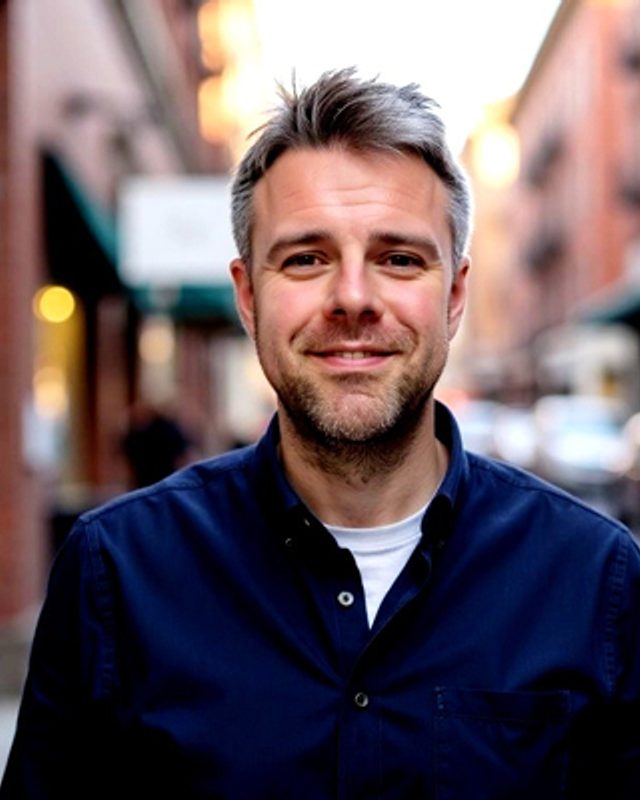
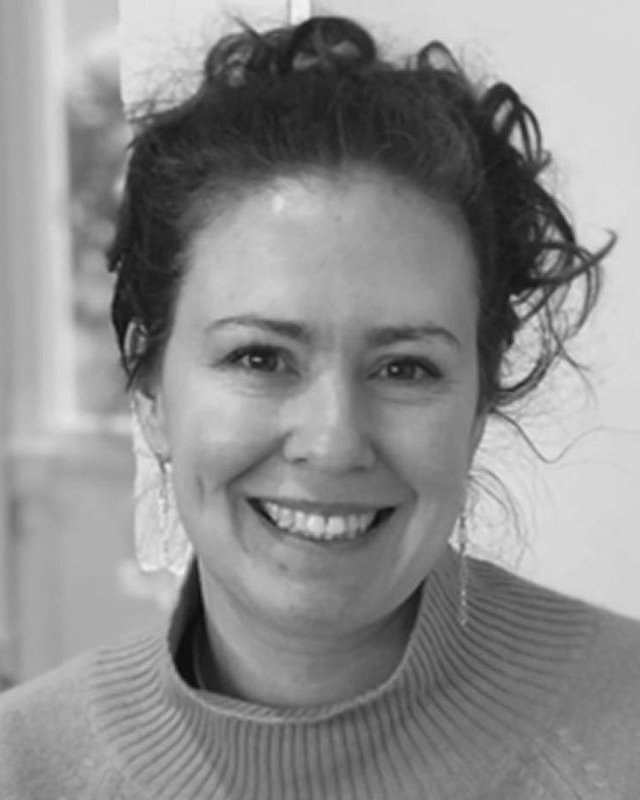
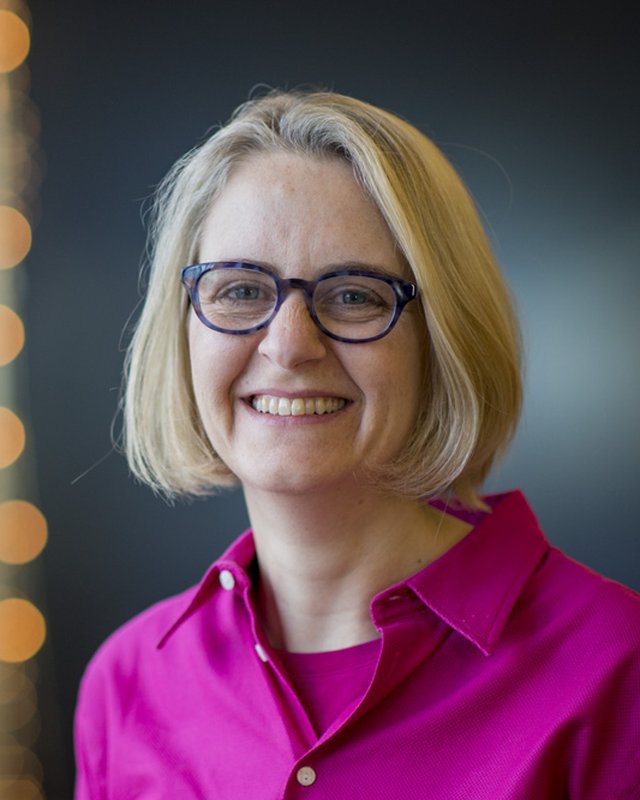
Oct 12 and 13 open with keynote panels featuring voices from across the open science ecosystem.

Workshops
Resilient Data & Sovereign Infrastructure
AT Protocol
Modular Research Components
VOWELS (Assessment, Evaluation, Insights, Observability, & Utility)
Funding Open Science & Open Source
Community day
Community day takes us out of the workshop rooms and into Leiden. It's our expansion of the hallway track: walk-and-talks, long coffees, museum visits, and the community workshops, each hosted at a place of its lead's choosing around Leiden.
A day for the community to experience life together, not just work together.
On October 7, the community day map opens to participants, who can sign up for community workshops there and plan other community events around them.
Open the community day map →From open tools to an open ecosystem
Title coming soon
Title coming soon
Modular Science Community Convergence
From research priorities to reusable evaluations
A hands-on Unjournal workshop
Theory of change
Live prototyping
Tooling Showcase
ZyenX
Get involved
The Institute
Identify · Converge · Support
IOSP is a continuous, year-long operation. The annual gathering is the checkpoint where we identify challenges and test solutions built by the open community throughout the year.
Identify
Through direct connections, workshops, and continuous engagement with the open science community, we identify critical gaps in infrastructure and the people and tools working to fill them.
Converge
Once a year we bring together the identified players — researchers, technologists, and infrastructure builders — to showcase progress, define priorities, and align efforts around shared challenges.
Support
Year-round, we provide resources, facilitate connections, and help collaborative progress move forward — turning event momentum into lasting infrastructure.
Repeat
Every gathering identifies bottlenecks and next steps. Every collaboration produces working code. Every year turns the key a little further.
Science should be
It's time to build the digital-native substrate.
A system of science is a complete configuration of five protocols — inference, quality, engagement, coordination, and preservation — enabled by the technical substrate of an era. Value, incentive, and governance processes guide the configuration of each protocol within a system. Today, three systems of science operate side by side — institutional, benefactor, and corporate — each operating on the same technical substrate, and each with their own sets of values, incentives, and governance processes. No one designed any of these systems. They emerged through a series of events, accidents, and actions intended to fulfill immediate needs.
The technical substrate of science has moved through five distinct eras over hundreds of years, each opening new primitives for the systems built on top. Scientific societies and the first journals emerged from letterpress, postal networks, and the telegraph to define the Organized Era of science. Research universities, professionalization, and formalized peer review took shape as the Professional Era embraced typewriters, telephone networks, and microfilm. Mainframes, photocopiers, and citation indexes led to federal funding, peer review, tenure, grant cycles, and the citation-based credit of the Institutional Era we still inhabit. Today we've wrapped the Institutional Era's processes in digital tools: PDFs as journals, h-indexes as memory, citation databases as card catalogs — though the primitives of these tools enable so much more.
The technical substrate of the next era will be digital-native, built by the global research community and designed intentionally from the ground up. From this substrate, a pluralistic era of scientific systems that amplify each other's strengths, make up for one another's failures, and grow stronger under stress will thrive.
The next era of science is antifragile.
| 1665 — 1876Organized | 1876 — 1950Professional | 1950 — 2000Institutional | 2000 — PresentDigitized | Building NowDigital-native | |
|---|---|---|---|---|---|
| InferenceGenerate · analyze · experiment |
|
|
|
|
|
| QualityVerify · replicate · trust |
|
|
|
|
|
| EngagementConnect · share · discover |
|
|
|
|
|
| CoordinationCredit · fund · collaborate |
|
|
|
|
|
| PreservationStore · access · archive |
|
|
|
|
|
An interactive expression. In development.
A thousand coordinated people, collaborating on small, achievable outputs, can raise cities.
Independent teams.
One substrate.
Across the ecosystem, independent teams are building components of a shared technical substrate for science. Science needs them to work together.
Storage & Preservation
IOSP 2025Persistent, FAIR-compliant storage with content addressing (CIDs) · distributed archives · automated metadata · long-term preservation protocols.
Compute & Execution
IOSP 2025Reproducible computational environments · container specs · execution manifests · distributed compute coordination · data visitation.
Validation & Trust
IOSP 2025Automated testing · continuous replication · cryptographic proofs of correctness · provenance tracking · trust scoring · attestation models · open algorithms.
Knowledge Graphs & Semantics
Semantic registries · knowledge graphs · composable research objects · cross-platform data schemas.
Discovery & Communication
IOSP 2025Federated search · semantic discovery · publishing APIs · event streams · collaborative review platforms · micropublishing.
Attribution & Credit
Contribution graphs · portable reputation · micro-attribution · transparent governance records.
Identity & Authentication
IOSP 2025Decentralized identifiers (DIDs) · key management · authentication protocols · agent registries.
Funding Innovation
Alternative funding models · retroactive public goods · quadratic funding · granular funding.
Collaboration Infrastructure
IOSP 2025Real-time coordination · federated workflows · cross-institutional projects · team science tools · shared workspaces.
IOSP 2025 — Denver, February 23–25
The inaugural gathering, at the Denver Museum of Nature and Science. Three days. Four hundred and twenty-five registrations for an eighty-person room. Numbers below; recap underneath.
Format
- Day 1Knowledge dissemination — talks, panels, framing
- Day 2Workshops — hands-on production across themes
- Day 3Coworking space in RiNo — work continued in small groups
Beyond the survey, the gathering kicked off post-event collaborations — work begun in workshops continued through the year as a basis for projects like MIRA, CAIROS, and PRSM.
Infrastructure stack used in production
- DeSci PublishSubmission & peer-review
- SilkIdentity & credentials
- IPFSContent-addressed storage
- CeramicData interoperability
- CODEXPersistent identifiers (dPIDs)
- Coordination NetworkAI synthesis
The gathering itself ran on the same infrastructure participants were stress-testing — submissions, reviews, identity, archival, all in production.
Speakers & workshop leaders
Planning committee
In their own words
What participants said after IOSP 2025.
It felt like we started a movement! This event incorporated stakeholders and put us in a better position to build the next system for science and publishing that deliberately incorporates their needs and our values.
Matthew Akamatsu
UW Discourse GraphsGot out of my house and met people; great conversations; lots of creative spitballing; met with some potential funders; made new friends; made some progress on some ideas; had the opportunity to make first pitch for new project.
Laure Haak
Mighty Red BarnGreat discussions and valuable connections that would be really hard to have in traditional academic conferences.
Ronen Tamari
Cosmik · Astera FellowI gained exposure to future technologies, while meeting people who want to change the world of science.
Franck Marchis
SETI InstituteAmazing intro to science / research world as someone not deeply in this space. Learned high-level concepts and low-level technical frameworks. As a contractor working in open source, decentralized technologies, there is simply nothing more valuable than a conference like this.
Paul Weidner
TechnologistI was exposed to novel technologically based efforts to support open science needs that I was not previously aware of. It was thought provoking and a great networking opportunity.
Doug Schuster
NSF NCARContact with developers and representatives of OS projects. A lot of learning about the tools, projects developed and under development. Possibility to participate in new initiatives. Debates about challenges and the future.
Edilson Damasio
Univ. Estadual de MaringáI had the chance to meet and connect with interesting people and learn about exciting initiatives.
Isabel Abedrapo
RemolinoExpert opinion across a range of relevant topics including challenges research libraries face when sharing data and very useful guidelines to keep in mind when rolling out new research technologies.
Martin Karlsson
Coordination NetworkI met some great people with whom I hope to collaborate in the future.
Daniela Saderi
PREreviewThe connections to others and the chance to have conversations were great.
Beth Duckles
Organizational Mycology
Be the first to hear about IOSP 2027.
IOSP news, resources, and community events. No noise.
Subscribe to the newsletter →